If you've got soggy ground, a wet basement, or a field that won't dry out, you've probably heard someone mention drain tile. It's one of the most cost-effective fixes in the dirt-work world — when it's done right. Here's what drain tile actually is, when your property needs it, and what separates a good install from one that fails in three years.
Drain tile is perforated pipe buried in clean gravel that collects water from saturated soil and carries it to a safe outlet. The pipe is typically 4-inch HDPE for residential work, 6-inch or larger for fields. It can run around a foundation (foundation drain), through a wet yard (yard tile), or across a field (field tile). Water seeps through the perforations into the pipe, flows downhill, and exits where you want it — into a daylight outlet, a ditch, a dry well, or a sump system.
Wet soil ruins basements, kills lawns, drowns crops, and undermines foundations. Once water gets into a basement, you're looking at finished wall repair, mold remediation, ruined storage, and a permanent musty smell. Drain tile is one of the most cost-effective ways to fix wet ground long-term — way cheaper than dealing with foundation repair, mold, or replanting after every wet spring.
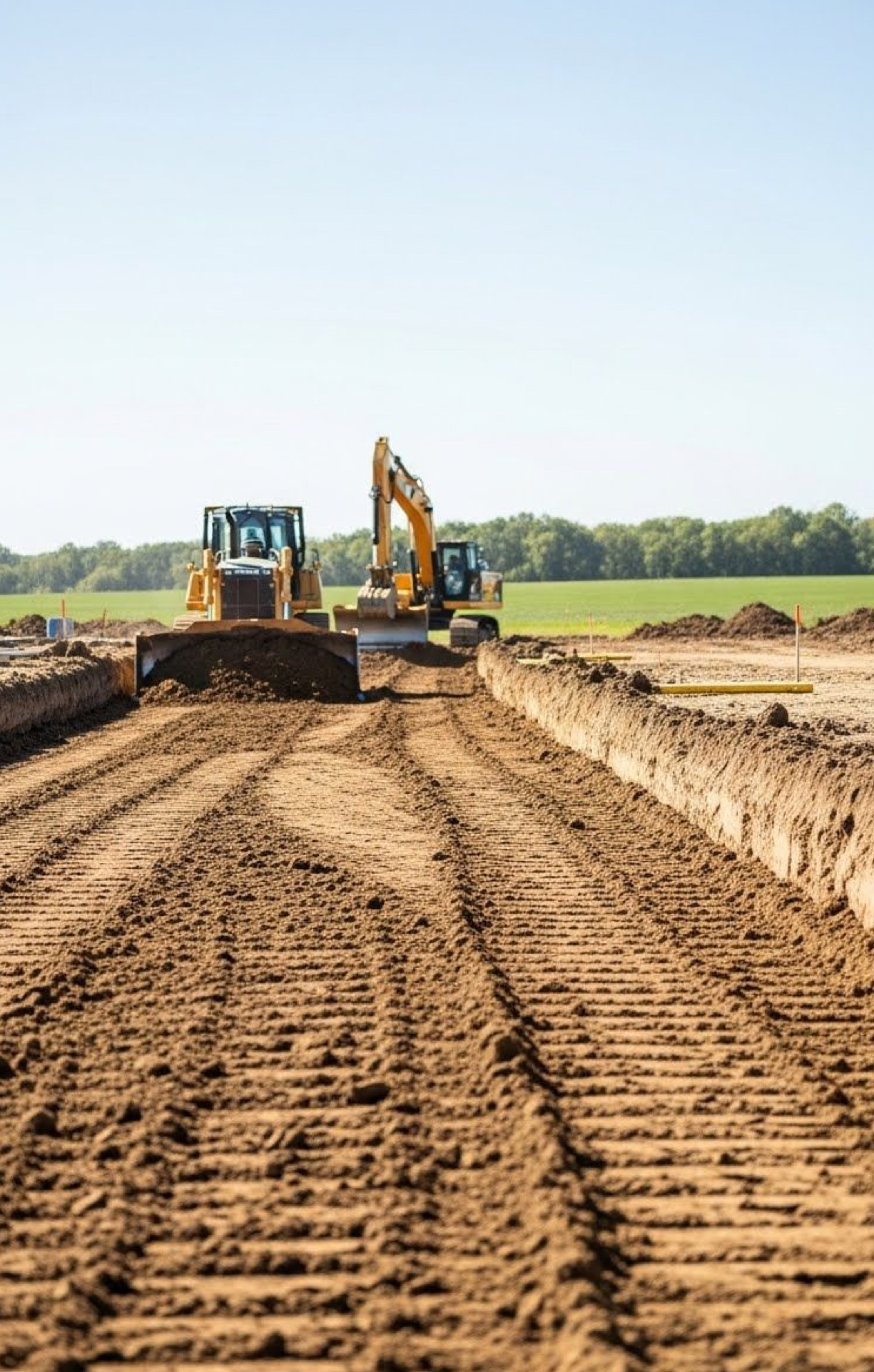
We trench to the right depth — typically below the problem water table, often 3 to 6 feet for foundation work — lay perforated pipe in clean drain rock, wrap the whole bundle in filter fabric so it doesn't silt in, and tie it into a daylight outlet or sump system. Slope is critical: usually 1/8 inch per foot minimum so the pipe self-cleans. Outlet planning is where most cheap installs fail. Slope and outlet planning are the difference between drain tile that works for 30 years and drain tile that fails in 3.
Foundation drain tile runs around the perimeter of a basement or footing, at footing depth, and is the single most important piece of water management on a new build. It catches water before it sits against the foundation wall.
Yard tile is shallower — usually 18 to 30 inches — and runs through a wet spot in the lawn to dry it out. Often paired with surface inlets to catch ponding water from the top, too.
Field tile is the agricultural version: longer runs, larger diameter, set deeper, designed to pull the water table down across acres of cropland. Same principle, different scale.
Drain tile only works if it has somewhere to go. The best outlet is daylight — the pipe exits a hillside or ditch bank with the end protected by rock or a critter screen. Gravity does all the work and there's nothing to maintain.
When daylight isn't available, we tie into a sump pit with a pump, or a properly sized dry well. Both work, but both have moving parts or capacity limits. We'd rather find a daylight outlet 200 feet away than install a pump.
We get called to fix bad drain tile a few times a year. Every time, it's one of three things: no filter fabric (so the pipe silts up), wrong slope or a low spot (so water sits and freezes), or a bad outlet (so water has nowhere to actually go).
All three are install-quality issues. Done right with clean rock, proper fabric, and a real outlet, drain tile is one of the most reliable pieces of infrastructure on a property.
Usually, yes — if the water is coming through or under the foundation. Foundation drain tile combined with proper exterior grading solves the vast majority of basement water problems. If the water is coming through the wall from above-grade (siding, windows), that's a separate fix.
Properly installed with clean rock, filter fabric, and a daylight outlet — 30 to 50 years easily. Modern HDPE pipe outlasts the old clay and concrete tile by a wide margin.
Yes. It's more work than installing on a new build because we have to excavate down to the footing, but it's done all the time for chronic wet-basement problems. We dig down on the affected side, install foundation drain tile and waterproofing, and backfill.
If any of this sounds like your property, give us a call. We'll come look, tell you straight what the actual problem is, and quote it free. Call 320-349-0354, email contact@rileysiteworks.com, or use the form.
Call 320-349-0354 or send us the details and we'll come back within 24 hours with a straight answer.