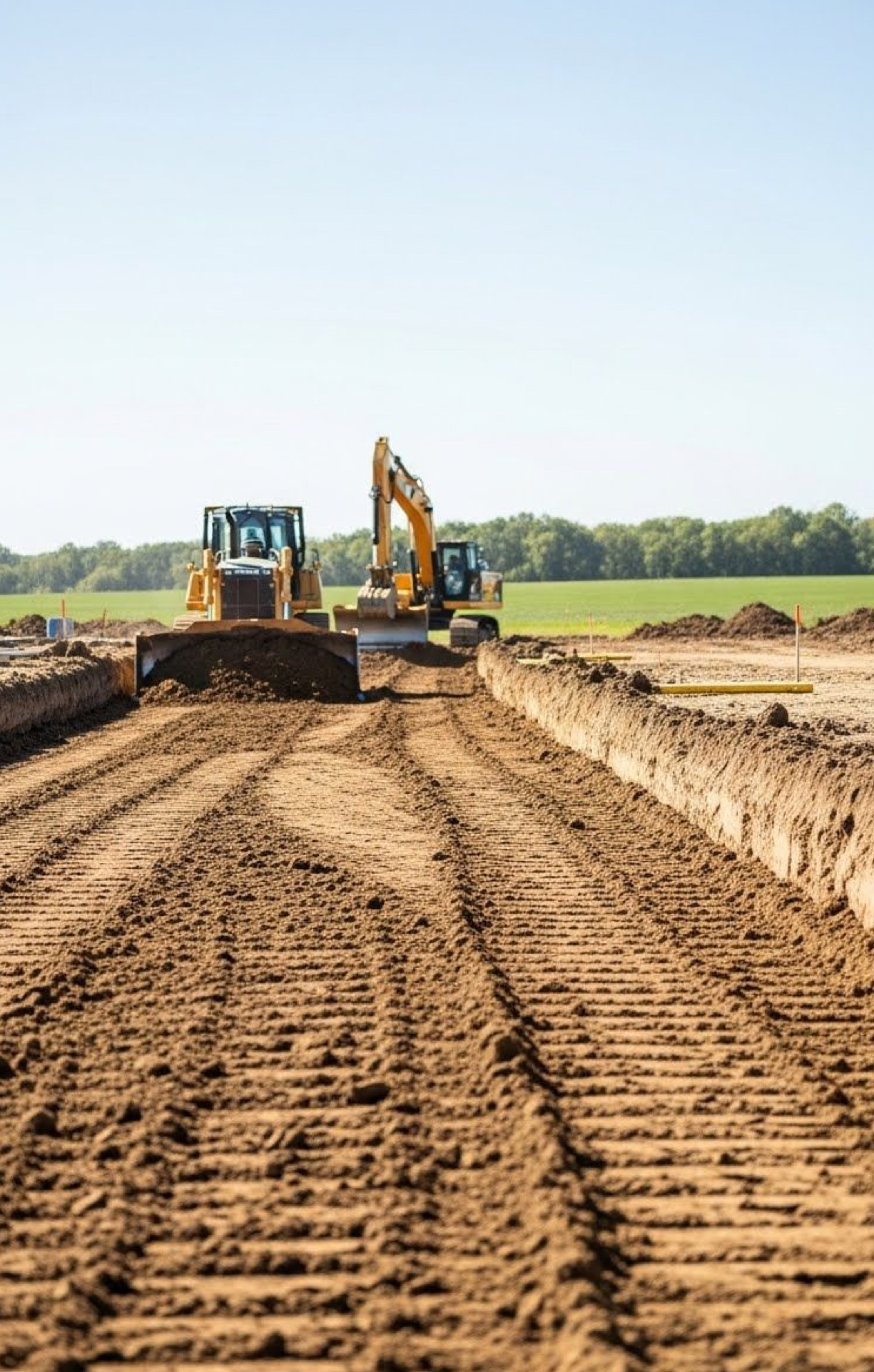
If you're building new, the foundation is the headline — but a lot of work happens before that concrete truck shows up. The quality of everything you can't see later — water management, settlement, basement moisture — is decided in the few weeks of dirt work before the foundation is poured. Here's what proper site prep actually looks like, step by step.
Site prep is everything that gets the dirt ready for the foundation: clearing, rough grading, dig-out, footings, and getting water moved away from where the house will sit. It's the dirt-work phase of a build — usually a couple of weeks of focused work before the concrete crew shows up. Done right, the foundation crew steps onto a clean, accurate hole and pours without drama. Done wrong, every trade after them is fighting it.
A foundation is only as good as the dirt under it. Bad site prep means settling, water problems, cracked walls, frost heave, and headaches that show up years after you've moved in and can't be fixed without tearing things back up. The money you save cutting corners here always shows up later — usually with interest. We've fixed enough bad site prep on other people's builds to know exactly where the bills land.
We clear the building footprint down to clean ground, rough grade the site for proper drainage during construction, dig the basement or footings to spec, manage the spoil so other trades can work, install foundation drain tile and stub-outs for utilities, and backfill cleanly once the foundation is in and waterproofed. By the time framing starts, water is already moving away from the house, the site is workable in any weather, and the next trade can do their job without a fight.
First pass is clearing trees, brush, and anything else in the way of the building footprint plus working room. Then we strip topsoil from the entire disturbed area and stockpile it on site. Topsoil is valuable and you'll want it back at the end of the project for finish grading. Burying it under the building or hauling it off is a costly mistake we see all the time.
Before we dig the basement, we rough grade the whole site so water moves away from where the foundation is going to sit. This protects the open hole from filling with water every time it rains during construction.
It also sets the stage for the final grading at the end of the project — the closer the site is to right at this stage, the less dirt has to be moved later, and the more predictable drainage ends up being long-term.
The actual dig-out happens to the depth and footprint your engineer or plan specifies, with clean walls and an over-dig that gives the foundation crew working room. We bench cuts or slope walls per OSHA, manage the spoil, and leave the bottom of the hole clean and accurate.
Accuracy matters here. An inch deep is a couple yards of extra concrete. An inch shallow is a re-dig. We laser-check the floor before we leave it for the concrete crew.
Once footings are poured and walls are up, we install exterior foundation drain tile in clean rock, wrapped in filter fabric, tied to a daylight outlet or sump. The concrete crew handles waterproofing membrane on the walls. We coordinate the timing so the membrane is dry before we backfill against it.
Backfill happens in compacted lifts — a couple feet at a time, compacted, then the next lift. Dumping all the dirt back in one big pile sounds faster, but it settles for years afterward, leaving the grade dropping toward the house every spring.
Once backfill is done, we rough-grade the site again to set up positive drainage for the rest of construction. The finish grade pass happens at the very end, after every other trade is gone.
On a typical residential build, two to three weeks of active dirt work spread across the build. Some of that is up-front (clearing, rough grade, basement dig), some is mid-project (utility trenching, backfill), and some is at the end (finish grade).
Both happen. Sometimes the GC subs us directly, sometimes the homeowner hires us and we coordinate with whoever's building the house. Either way, communication with the foundation and framing crews is what makes it go smooth.
We've seen everything — high clay, expansive soils, old fill, high water tables. The fix depends on the report, but options range from over-excavating and replacing with engineered fill, to dewatering during construction, to deeper footings. We work off whatever the geotech report says.
If any of this sounds like your property, give us a call. We'll come look, tell you straight what the actual problem is, and quote it free. Call 320-349-0354, email contact@rileysiteworks.com, or use the form.
Call 320-349-0354 or send us the details and we'll come back within 24 hours with a straight answer.