Buckthorn and buck brush are two of the most common invasive headaches we see on properties across North Dakota and Minnesota. If you don't deal with them early, they take over fast — and they don't pull out easy. This guide walks through how to identify them, why they matter, and what proper removal actually looks like on a real property.
Buckthorn is an invasive shrub-to-small-tree that crowds out native plants. The two species we deal with here are common buckthorn (Rhamnus cathartica) and glossy buckthorn (Frangula alnus) — both non-native, both on the noxious list in Minnesota. Buck brush (sometimes called western snowberry or wolfberry) is a low, spreading shrub that forms thick mats across pastures, fence lines, and unmaintained ground. Both spread aggressively by roots and seed, and both come back hard if you only cut the top.
Left alone, buckthorn and buck brush choke out native trees and oak regeneration, ruin pasture, swallow fence lines, and make property unusable. Buckthorn berries act as a laxative on birds, so seed spreads everywhere birds land. They drop massive amounts of seed every year, so the longer you wait, the bigger the seed bank in your soil — and the bigger the bill — gets. We've seen 5-acre clears that should have been a weekend job ten years earlier.
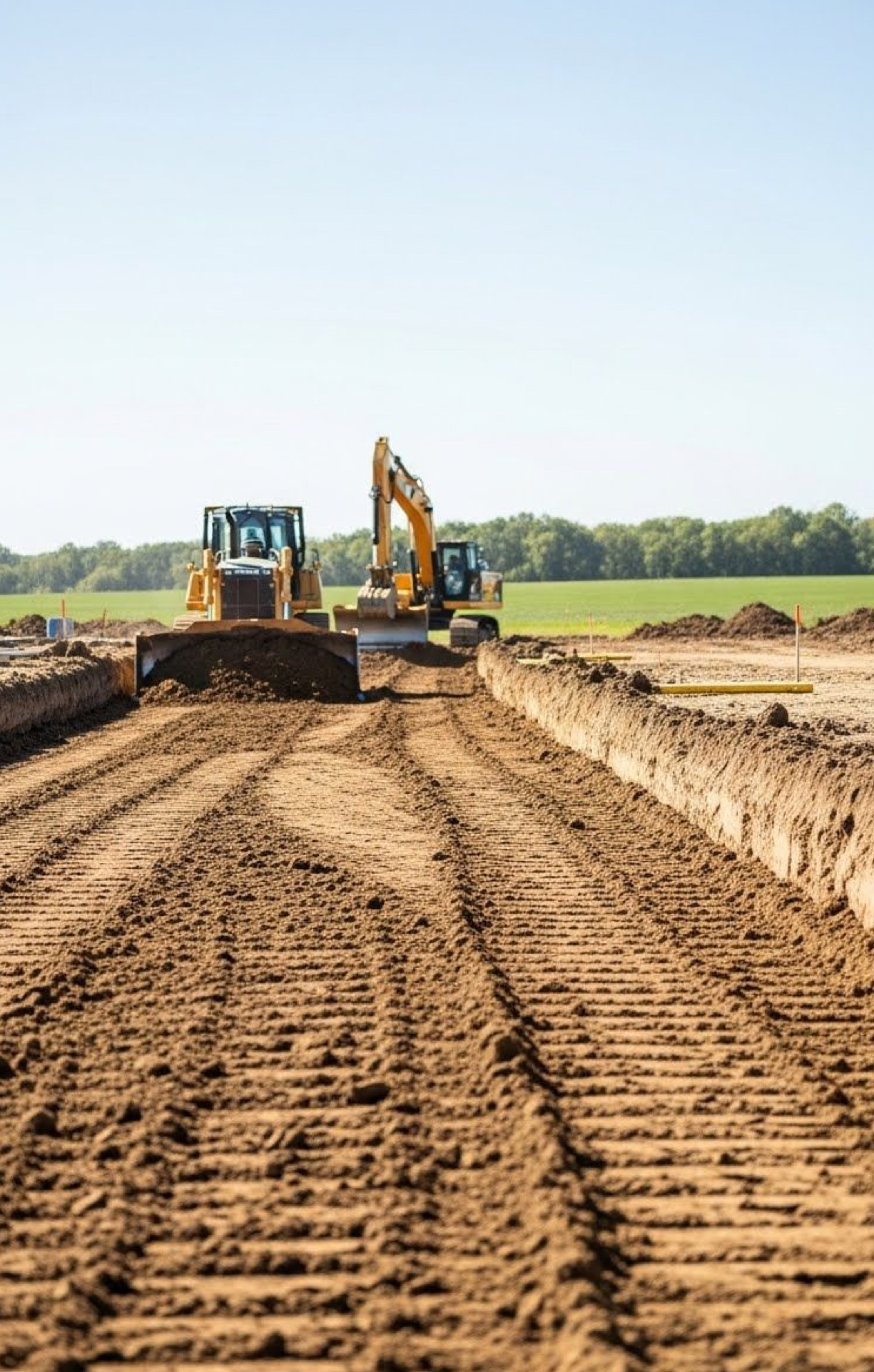
Proper removal means pulling roots, not just cutting tops. We come in with the right equipment — typically a skid steer with a forestry mulcher or a tracked machine with a grapple — take out the woody material, treat or remove stumps so it doesn't resprout, and haul everything off. For larger acreages we'll often mulch in place and stump-treat in the same pass. Done right, you don't have to fight the same battle again next year.
The easiest time to spot buckthorn is late fall. After every native tree has dropped its leaves, buckthorn is still standing there green. That alone will tell you how much you have.
Up close, look for oval leaves with finely toothed edges and curved veins that run toward the leaf tip. Mature plants have grayish bark with small horizontal markings. Scratch a small twig and the inner wood is bright yellow-orange — a dead giveaway.
Buckthorn and buck brush both resprout from roots. If you just cut the stems, you'll have a thicker, bushier mess within two seasons. That's the single most common mistake we see — somebody clears it themselves, feels good about it, and within a year it's worse than before.
Real removal means pulling the root mass with equipment, mulching everything to the dirt, or treating cut stumps within minutes of the cut so the chemical actually translocates down into the roots. We size the approach to the property and how much you want to spend.
A small infestation along a fence line can usually be knocked out in a day. A 10-acre shelterbelt that's been ignored for 15 years is days of mulching, root removal, and follow-up. The cost difference is an order of magnitude — and the property keeps losing usable acreage every year you wait.
Late fall through early spring. Leaves are off (except for buckthorn itself, which makes it easy to find), the ground is firm, and stump treatments work well in cool weather.
If we pull roots or properly treat stumps, the original plants don't come back. Seedlings will still sprout from the existing seed bank for several years — a quick spot treatment each spring keeps them from re-establishing.
Both. We've cleared single fence lines and we've cleared full quarter-section shelterbelts. Call us — if it's small enough that you don't need us, we'll tell you that too.
If any of this sounds like your property, give us a call. We'll come look, tell you straight what the actual problem is, and quote it free. Call 320-349-0354, email contact@rileysiteworks.com, or use the form.
Call 320-349-0354 or send us the details and we'll come back within 24 hours with a straight answer.